Upper Back / Shoulder Blade Area Pain
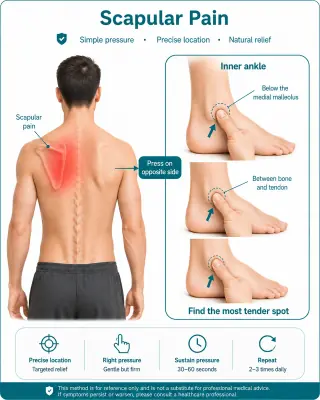
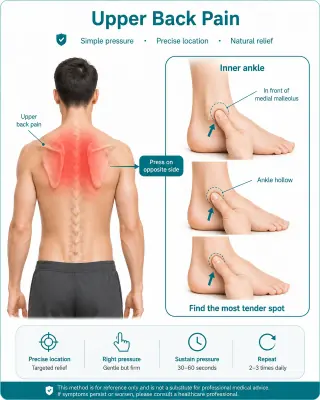
For tightness or pulling pain around the upper back and shoulder blade, using responsive points in the opposite inner ankle.
Independent field notes · Source status shown
Conservative movement checks adapted from public acupuncture demonstrations—with the differences, limits, and reasons to stop made explicit.
Guide library
Pick the closest pain pattern and follow its illustrated method. The library currently contains 18 full editorial guides and 19 source field notes.
For tightness or pulling pain around the upper back and shoulder blade, using responsive points in the opposite inner ankle.
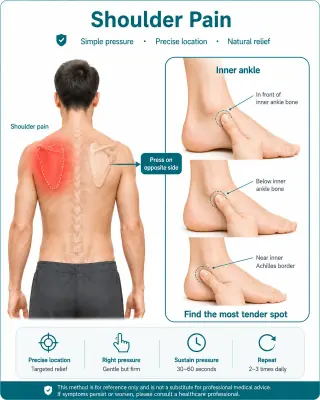
For shoulder-blade pain, pinching, or pulling, using a responsive point below and in front of the opposite inner ankle while rolling or raising the shoulder.
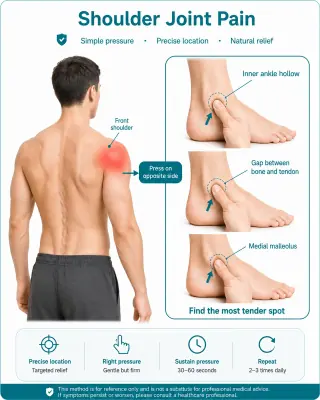
For shoulder discomfort or limited movement, using responsive points in the opposite inner-ankle hollow.
For shoulder pain with limited lifting, outward movement, or reaching back, using responsive points at the opposite inner ankle while repeating that arm movement.
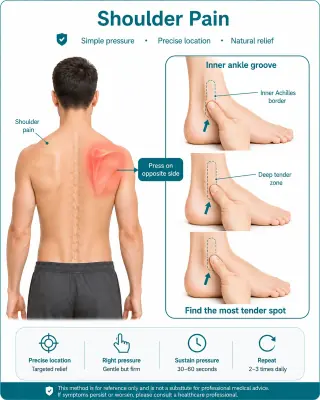
For shoulder discomfort during movement, using the groove beside the opposite inner Achilles tendon and front-inner ankle while repeating the limited motion.
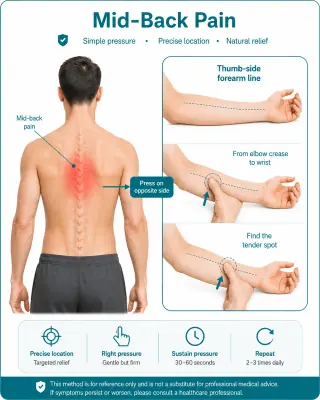
For mid-back discomfort, using the thumb-side forearm line on the opposite side while repeating the affected movement.
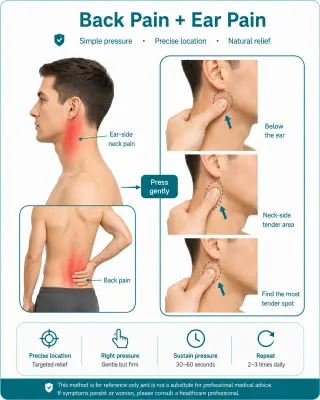
For back pain combined with discomfort near the side of the neck, behind the ear, or the upper shoulder area.
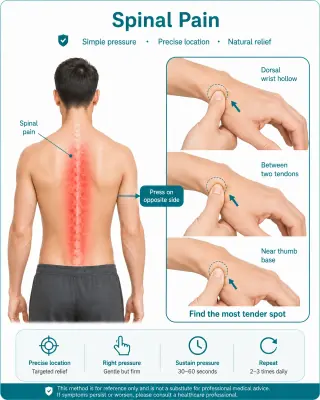
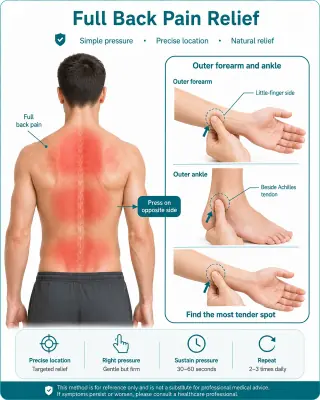
For general spinal discomfort, stiffness, or pulling pain along the back, especially when bending, turning, or standing for long periods.
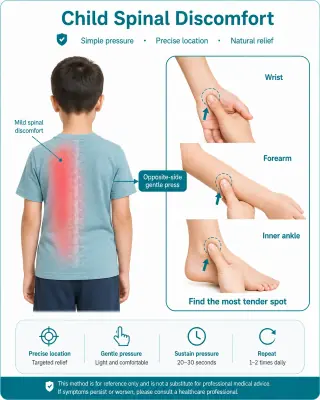
For mild, temporary spinal discomfort in children, using very gentle pressure only.
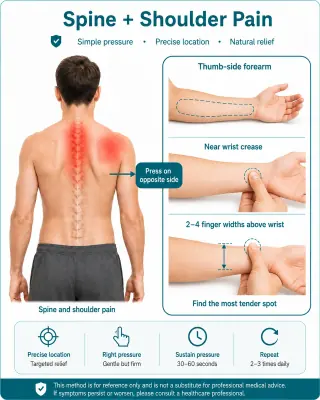
For combined spine and shoulder discomfort, especially when shoulder movement also pulls into the back.
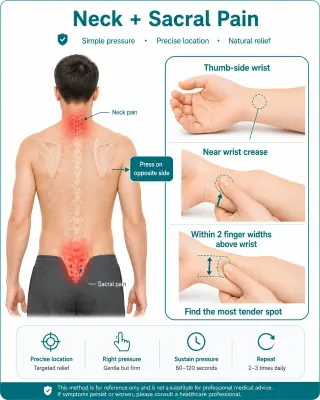
For neck discomfort combined with pain or tightness around the sacrum or lower back.
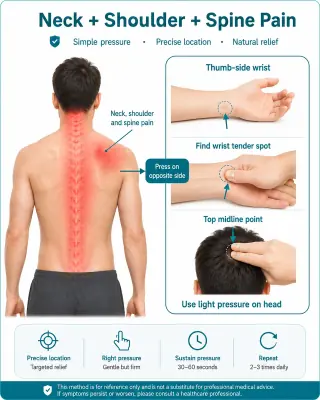
For combined neck, shoulder, and spinal discomfort, especially when several areas feel connected during movement.
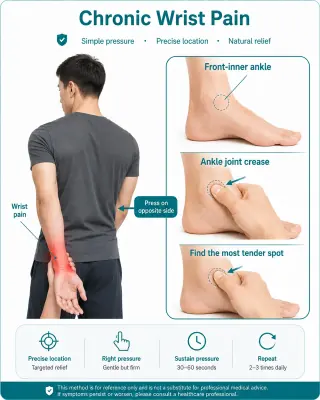
For long-term wrist discomfort or stiffness, using a responsive point at the opposite front-inner ankle.
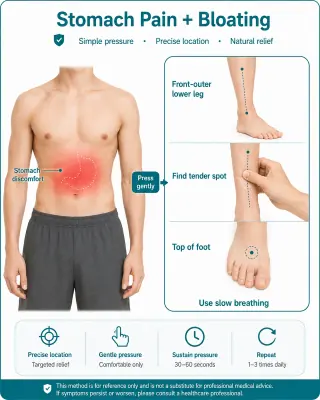
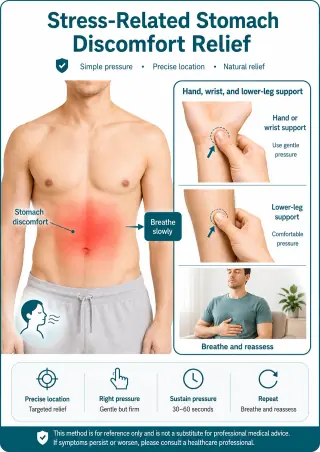
For mild stomach discomfort, fullness, or bloating, using gentle pressure support only.
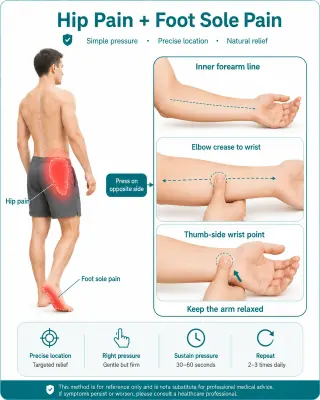
For hip discomfort with foot-sole pain, using responsive points along the opposite inner forearm.
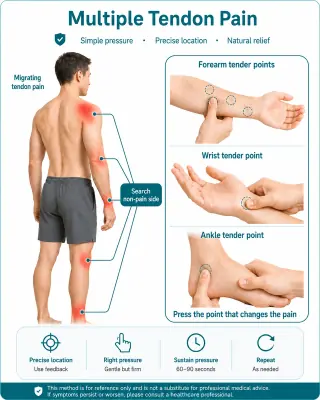
For multiple areas of tendon soreness or chronic overuse discomfort, especially when several joints or muscle-tendon areas feel irritated.
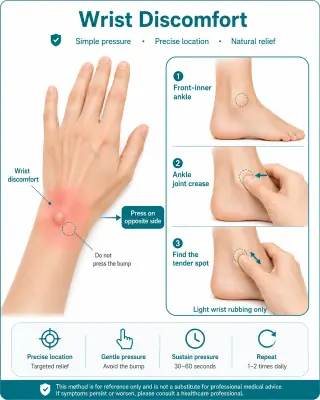
For wrist discomfort around a known or suspected ganglion cyst, using gentle support around the wrist and forearm only.
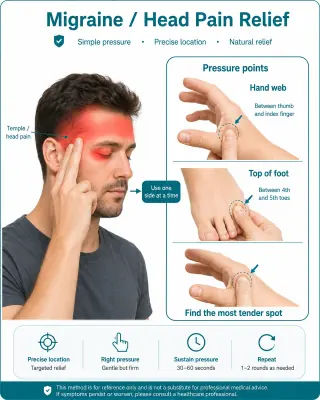
For migraine-like head discomfort, using gentle finger pressure to encourage relaxation.
For broad back discomfort or tightness, using a responsive forearm point while repeating the same slow bend, turn, or other familiar back movement.
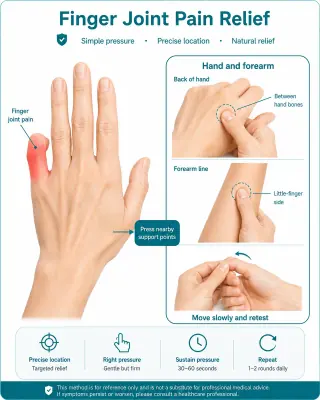
For finger-joint discomfort or stiffness, using nearby responsive support points on the hand or forearm.
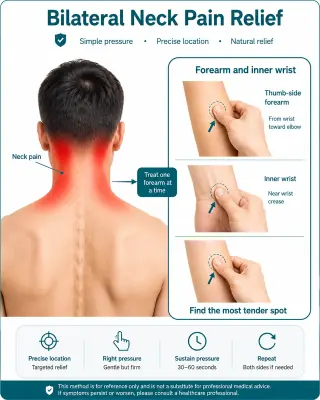
For neck pain or stiffness experienced on both sides of the neck simultaneously.
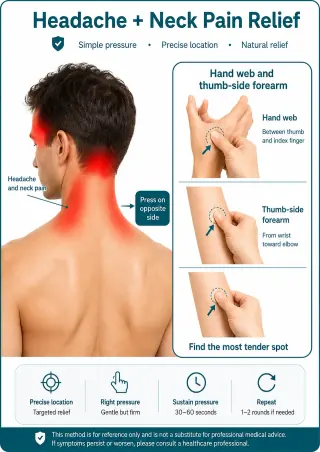
For headache with neck tightness, using the hand web or thumb-side forearm shown in the illustration while repeating the same gentle neck movement.
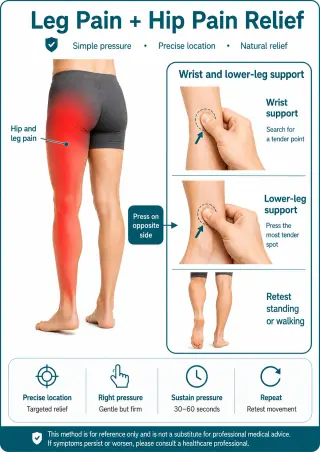
For generalized leg and hip discomfort or tightness, using a responsive point on the opposite lower leg or foot while repeating the same slow leg or hip movement.
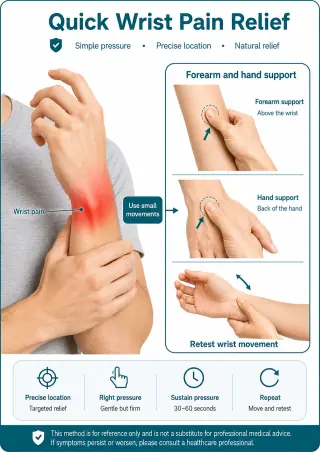
For minor wrist stiffness after daily tasks, using a responsive point on the opposite forearm or hand while repeating the same slow wrist bend or rotation.
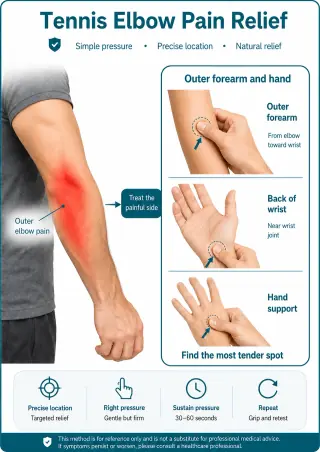
For elbow and forearm tightness from repetitive use, using responsive support points on the painful side.
For stomach tension or bloating that often accompanies periods of high stress.
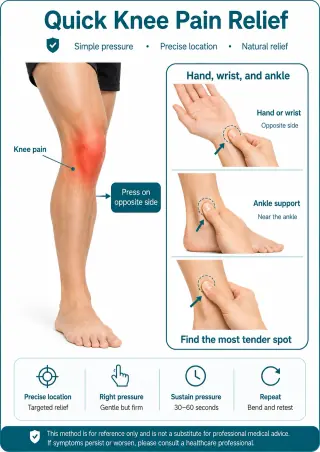
For minor knee stiffness, using responsive support points on the opposite hand or wrist while bending and retesting.
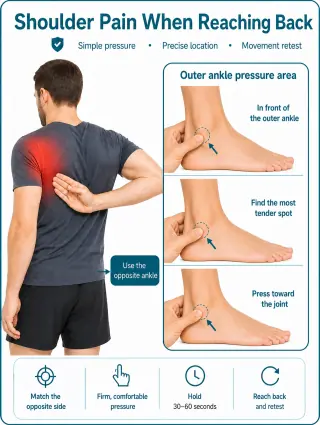
For shoulder pain triggered by reaching behind the back, using the most responsive point in the opposite outer-ankle hollow.
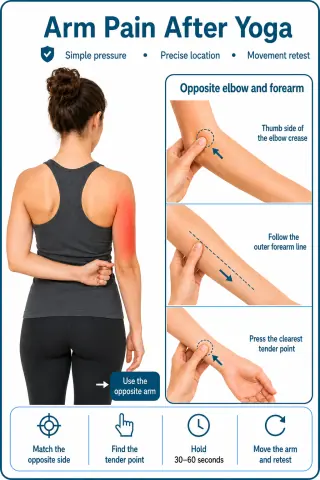
For arm pain with nearby shoulder-blade discomfort after yoga, using responsive points at the opposite elbow crease and outer forearm.
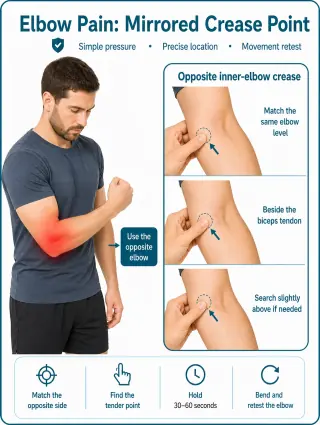
For elbow pain reproduced by bending or local pressure, using a same-level mirrored point in the opposite inner-elbow crease.
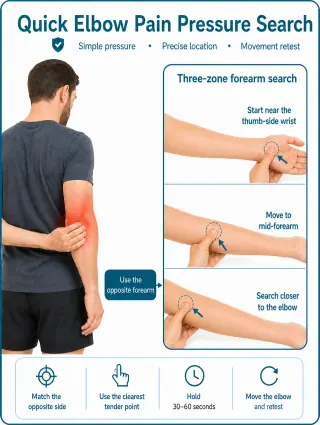
For elbow pain, using a three-zone search along the opposite outer forearm from the thumb-side wrist toward the elbow.
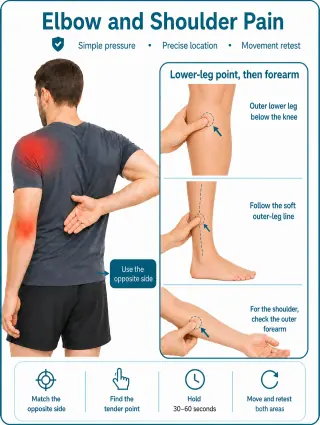
For elbow pain with shoulder discomfort, starting at a responsive point on the opposite outer lower leg and adding the opposite outer forearm only if needed.
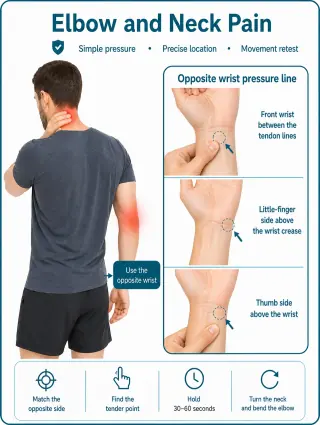
For elbow pain with neck discomfort, using a sequence of responsive points across the opposite front, little-finger-side, and thumb-side wrist.
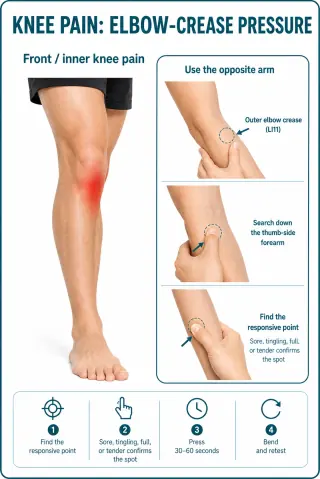
For front or inner knee pain reproduced by bending, kneeling, or stairs, using responsive points at the opposite outer elbow crease and thumb-side forearm.
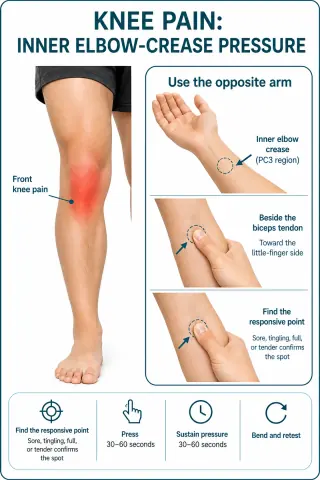
For front knee pain felt while sitting or walking, using a mirrored responsive point at the opposite inner elbow crease near PC3.
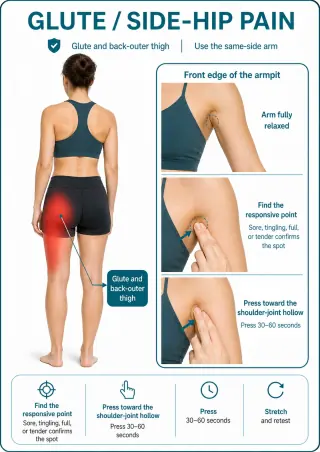
For glute or side-hip pain that may extend down the back-outer thigh, using the responsive point at the front edge of the same-side armpit.
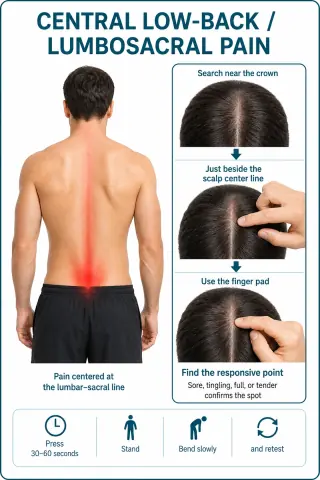
For pain centered where the lumbar spine meets the sacrum and extending upward during standing or bending, using a responsive scalp point near the crown.
How these notes are made
Our source videos show licensed-needle procedures. We do not teach those procedures. We document the original movement test, replace the invasive step with conservative touch, and say plainly that the substitution is not clinically equivalent.
See the full editorial methodA direct link appears when the title, body region, and public record match. Questionable matches stay labeled.
No needles, no forceful manipulation, no promise that a distant point will fix a condition.
Each page includes red flags, interpretation notes, and U.S. public-health references.
Read before you try